
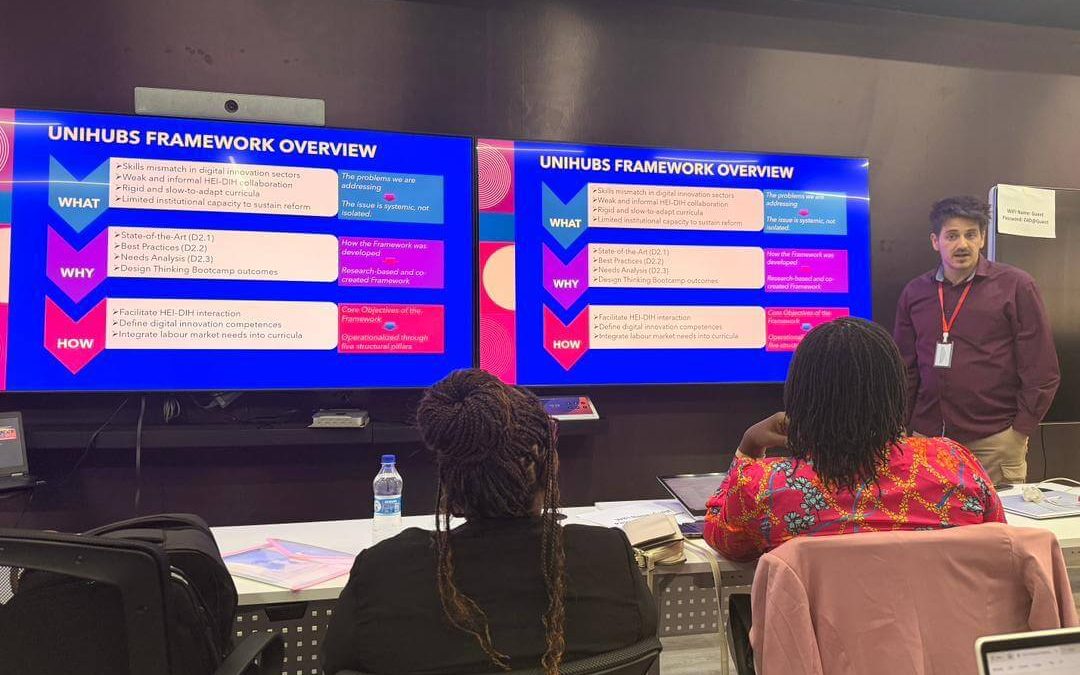
UNIHUBS Training Kicks Off in Nairobi with Strong Focus on Collaboration and Innovation
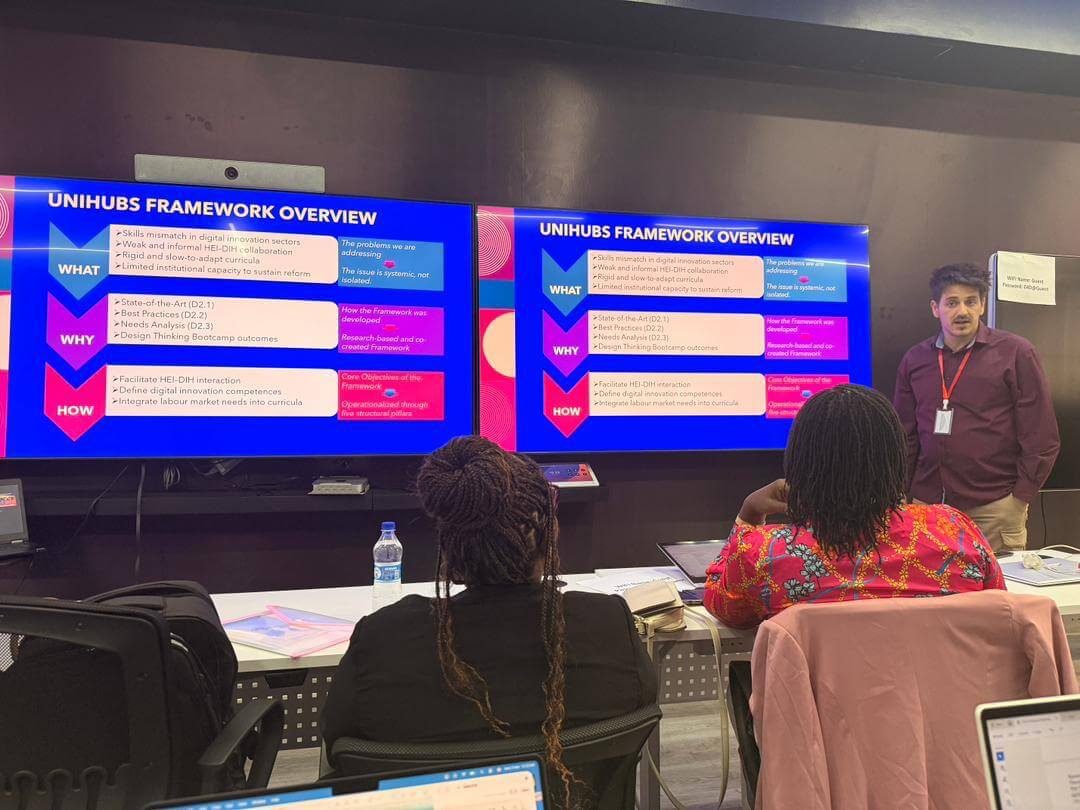
The UNIHUBS consortium today began a multi-day training and coordination meeting in Nairobi, bringing together representatives from Higher Education Institutions (HEIs) and Digital Innovation Hubs (DIHs) to deepen collaboration and strengthen the delivery of the project across partner regions.

The gathering is designed to align partners on the UNIHUBS framework, refine educational tools, and strengthen joint implementation between academia and innovation ecosystems. At its core, the project seeks to modernise curricula, promote experiential learning, and enhance student employability by bridging the gap between universities and digital innovation hubs.

Day one began with registration and informal networking, allowing participants to reconnect and set the tone for collaboration. The official opening session outlined the objectives of the training and reaffirmed the shared commitment to building stronger HEI–DIH partnerships.

This was followed by a comprehensive overview of the UNIHUBS project and its training goals. Participants revisited the project’s strategic vision, with particular emphasis on how coordinated action between HEIs and DIHs can accelerate digital innovation and skills development.

A dedicated session then unpacked the UNIHUBS framework, clarifying how its components fit together and how each partner contributes to the overall objectives. The discussion reinforced the importance of structured collaboration, practical learning approaches, and ecosystem integration.

Attention then turned to the educational materials and tools developed under the project. Participants explored how these resources can be effectively used within teaching environments and innovation programmes, ensuring that they are both practical and adaptable to different institutional contexts.

An interactive group activity followed, focused on team building and mapping expectations. This session allowed partners to openly discuss roles, anticipated outcomes, and coordination mechanisms, strengthening alignment across institutions.

After lunch, the programme moved into a deeper examination of the educational package, including practical considerations for implementation during the training phase. The aim was to translate strategy into action, ensuring that the tools developed under the project are applied effectively within both universities and innovation hubs.

As the training continues, the Nairobi meeting is already reinforcing the relevance of UNIHUBS for both HEIs and DIHs. For universities, the project offers structured pathways to integrate innovation-driven learning into curricula. For digital innovation hubs, it strengthens engagement with academic institutions, expands talent pipelines, and supports the co-creation of practical, market-relevant skills. Together, these efforts contribute to more responsive education systems and stronger innovation ecosystems across partner regions.

The UNIHUBS consortium today began a multi-day training and coordination meeting in Nairobi, bringing together representatives from Higher Education Institutions (HEIs) and Digital Innovation Hubs (DIHs) to deepen collaboration and strengthen the delivery of the project across partner regions.

The gathering is designed to align partners on the UNIHUBS framework, refine educational tools, and strengthen joint implementation between academia and innovation ecosystems. At its core, the project seeks to modernise curricula, promote experiential learning, and enhance student employability by bridging the gap between universities and digital innovation hubs.

Day one began with registration and informal networking, allowing participants to reconnect and set the tone for collaboration. The official opening session outlined the objectives of the training and reaffirmed the shared commitment to building stronger HEI–DIH partnerships.

This was followed by a comprehensive overview of the UNIHUBS project and its training goals. Participants revisited the project’s strategic vision, with particular emphasis on how coordinated action between HEIs and DIHs can accelerate digital innovation and skills development.

A dedicated session then unpacked the UNIHUBS framework, clarifying how its components fit together and how each partner contributes to the overall objectives. The discussion reinforced the importance of structured collaboration, practical learning approaches, and ecosystem integration.

Attention then turned to the educational materials and tools developed under the project. Participants explored how these resources can be effectively used within teaching environments and innovation programmes, ensuring that they are both practical and adaptable to different institutional contexts.

An interactive group activity followed, focused on team building and mapping expectations. This session allowed partners to openly discuss roles, anticipated outcomes, and coordination mechanisms, strengthening alignment across institutions.

After lunch, the programme moved into a deeper examination of the educational package, including practical considerations for implementation during the training phase. The aim was to translate strategy into action, ensuring that the tools developed under the project are applied effectively within both universities and innovation hubs.

As the training continues, the Nairobi meeting is already reinforcing the relevance of UNIHUBS for both HEIs and DIHs. For universities, the project offers structured pathways to integrate innovation-driven learning into curricula. For digital innovation hubs, it strengthens engagement with academic institutions, expands talent pipelines, and supports the co-creation of practical, market-relevant skills. Together, these efforts contribute to more responsive education systems and stronger innovation ecosystems across partner regions.

The UNIHUBS consortium today began a multi-day training and coordination meeting in Nairobi, bringing together representatives from Higher Education Institutions (HEIs) and Digital Innovation Hubs (DIHs) to deepen collaboration and strengthen the delivery of the project across partner regions.

The gathering is designed to align partners on the UNIHUBS framework, refine educational tools, and strengthen joint implementation between academia and innovation ecosystems. At its core, the project seeks to modernise curricula, promote experiential learning, and enhance student employability by bridging the gap between universities and digital innovation hubs.

Day one began with registration and informal networking, allowing participants to reconnect and set the tone for collaboration. The official opening session outlined the objectives of the training and reaffirmed the shared commitment to building stronger HEI–DIH partnerships.

This was followed by a comprehensive overview of the UNIHUBS project and its training goals. Participants revisited the project’s strategic vision, with particular emphasis on how coordinated action between HEIs and DIHs can accelerate digital innovation and skills development.

A dedicated session then unpacked the UNIHUBS framework, clarifying how its components fit together and how each partner contributes to the overall objectives. The discussion reinforced the importance of structured collaboration, practical learning approaches, and ecosystem integration.

Attention then turned to the educational materials and tools developed under the project. Participants explored how these resources can be effectively used within teaching environments and innovation programmes, ensuring that they are both practical and adaptable to different institutional contexts.

An interactive group activity followed, focused on team building and mapping expectations. This session allowed partners to openly discuss roles, anticipated outcomes, and coordination mechanisms, strengthening alignment across institutions.

After lunch, the programme moved into a deeper examination of the educational package, including practical considerations for implementation during the training phase. The aim was to translate strategy into action, ensuring that the tools developed under the project are applied effectively within both universities and innovation hubs.

As the training continues, the Nairobi meeting is already reinforcing the relevance of UNIHUBS for both HEIs and DIHs. For universities, the project offers structured pathways to integrate innovation-driven learning into curricula. For digital innovation hubs, it strengthens engagement with academic institutions, expands talent pipelines, and supports the co-creation of practical, market-relevant skills. Together, these efforts contribute to more responsive education systems and stronger innovation ecosystems across partner regions.

The UNIHUBS consortium today began a multi-day training and coordination meeting in Nairobi, bringing together representatives from Higher Education Institutions (HEIs) and Digital Innovation Hubs (DIHs) to deepen collaboration and strengthen the delivery of the project across partner regions.

The gathering is designed to align partners on the UNIHUBS framework, refine educational tools, and strengthen joint implementation between academia and innovation ecosystems. At its core, the project seeks to modernise curricula, promote experiential learning, and enhance student employability by bridging the gap between universities and digital innovation hubs.

Day one began with registration and informal networking, allowing participants to reconnect and set the tone for collaboration. The official opening session outlined the objectives of the training and reaffirmed the shared commitment to building stronger HEI–DIH partnerships.

This was followed by a comprehensive overview of the UNIHUBS project and its training goals. Participants revisited the project’s strategic vision, with particular emphasis on how coordinated action between HEIs and DIHs can accelerate digital innovation and skills development.

A dedicated session then unpacked the UNIHUBS framework, clarifying how its components fit together and how each partner contributes to the overall objectives. The discussion reinforced the importance of structured collaboration, practical learning approaches, and ecosystem integration.

Attention then turned to the educational materials and tools developed under the project. Participants explored how these resources can be effectively used within teaching environments and innovation programmes, ensuring that they are both practical and adaptable to different institutional contexts.

An interactive group activity followed, focused on team building and mapping expectations. This session allowed partners to openly discuss roles, anticipated outcomes, and coordination mechanisms, strengthening alignment across institutions.

After lunch, the programme moved into a deeper examination of the educational package, including practical considerations for implementation during the training phase. The aim was to translate strategy into action, ensuring that the tools developed under the project are applied effectively within both universities and innovation hubs.

As the training continues, the Nairobi meeting is already reinforcing the relevance of UNIHUBS for both HEIs and DIHs. For universities, the project offers structured pathways to integrate innovation-driven learning into curricula. For digital innovation hubs, it strengthens engagement with academic institutions, expands talent pipelines, and supports the co-creation of practical, market-relevant skills. Together, these efforts contribute to more responsive education systems and stronger innovation ecosystems across partner regions.

Written by Gideon Brefo

More From This Category

Last Consortium Meeting for 2025

Last Consortium Meeting for 2025

Following the final UNIHUBS consortium meeting of 2025, project partners came together to review progress, reflect on recent activities, and align on key priorities for the next phase of implementation. The meeting highlighted significant progress made over the past...

read more
Last Consortium Meeting for 2025

Last Consortium Meeting for 2025

Following the final UNIHUBS consortium meeting of 2025, project partners came together to review progress, reflect on recent activities, and align on key priorities for the next phase of implementation. The meeting highlighted significant progress made over the past...

read more
Last Consortium Meeting for 2025

Last Consortium Meeting for 2025

Following the final UNIHUBS consortium meeting of 2025, project partners came together to review progress, reflect on recent activities, and align on key priorities for the next phase of implementation. The meeting highlighted significant progress made over the past...

read more

0 Comments

0 Comments

Submit a Comment

Your email address will not be published. Required fields are marked *