
Artificial Intelligence is rapidly changing the way students learn, create, and prepare for work. Across universities and innovation ecosystems, new AI-powered approaches are helping students move from ideas to action faster than ever before. Recognising this shift, the UNIHUBS project has released a new series of educational resources focused on Generative AI Literacy, Vibe Coding, and Vibe Design — three emerging areas shaping the future of employability, entrepreneurship, and digital innovation.
Developed under the Erasmus+ Capacity Building in Higher Education initiative, these publications aim to help students, educators, and entrepreneurs better understand how AI can be used responsibly, creatively, and effectively in academic and professional environments. The resources also support UNIHUBS’ wider mission of strengthening innovation and entrepreneurship education across African Higher Education Institutions (HEIs).
Building AI Literacy for the Future Workforce
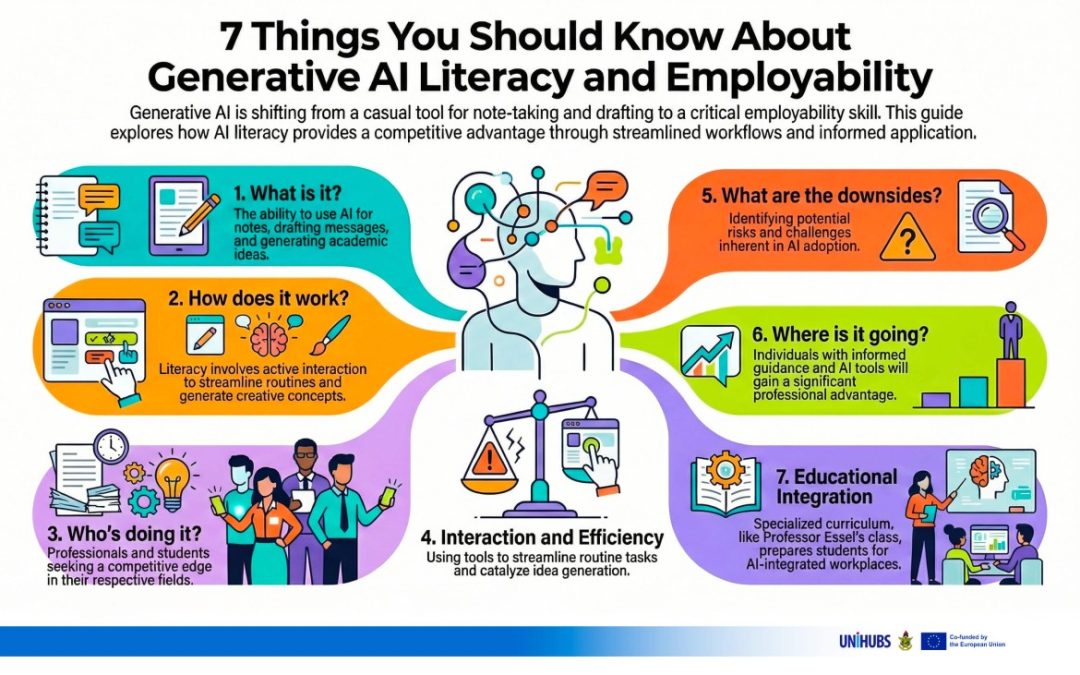
The publication Generative AI Literacy and Employability examines how AI literacy is becoming an essential skill for graduates entering today’s digital economy. Rather than viewing AI simply as a tool for generating text or summarising notes, the publication highlights the importance of knowing how to critically evaluate AI outputs, refine prompts, verify information, and apply AI ethically in real-world settings.
The resource explains that future employability will increasingly depend on a graduate’s ability to combine technical knowledge with creativity, communication, adaptability, and responsible AI use. It also encourages students to see AI not as a shortcut, but as a support tool that can enhance productivity, research, entrepreneurial thinking, and professional development.
What Is “Vibe Coding”?
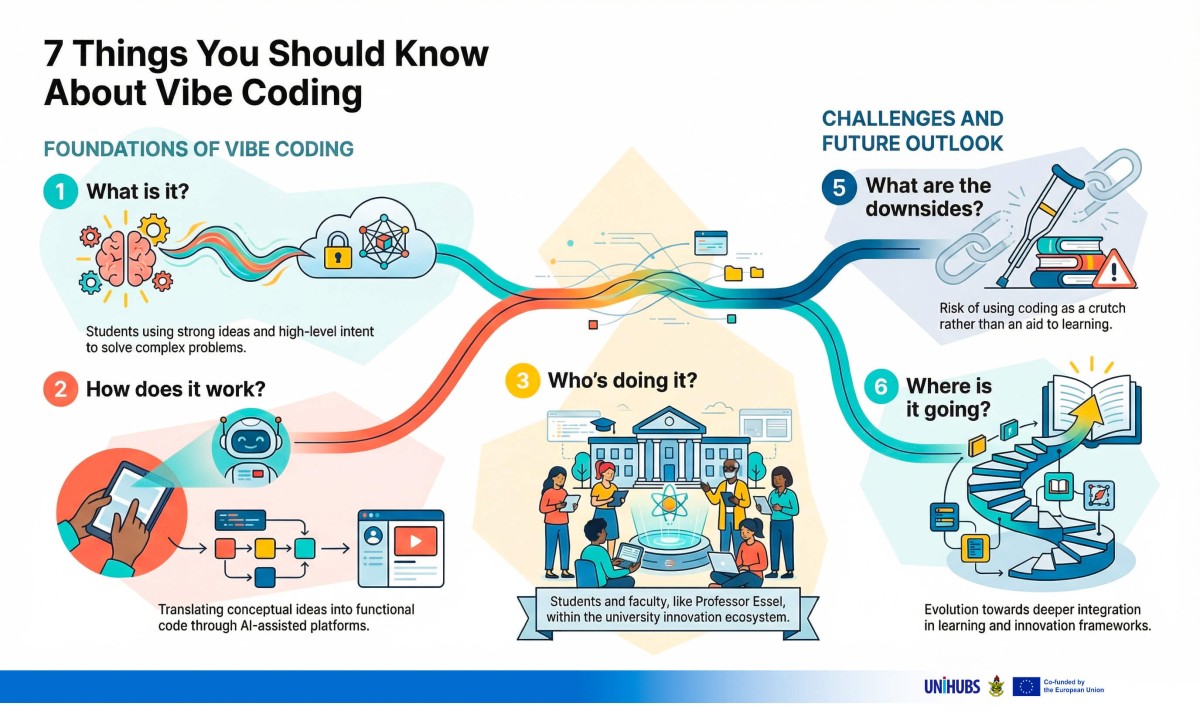
One of the most innovative topics explored in the new publications is Vibe Coding — an AI-assisted approach to software development that allows users to describe ideas in natural language while AI systems help generate and refine code.
The publication shows how vibe coding can lower barriers for students who may not yet have advanced programming skills but still want to build digital solutions and prototypes. Instead of focusing only on syntax, students learn how to frame problems, evaluate outputs, test solutions, and iterate creatively.
It should be stressed that vibe coding does not replace programming expertise. Rather, it shifts learning toward critical thinking, experimentation, collaboration, and entrepreneurial problem-solving.
Introducing “Vibe Design”
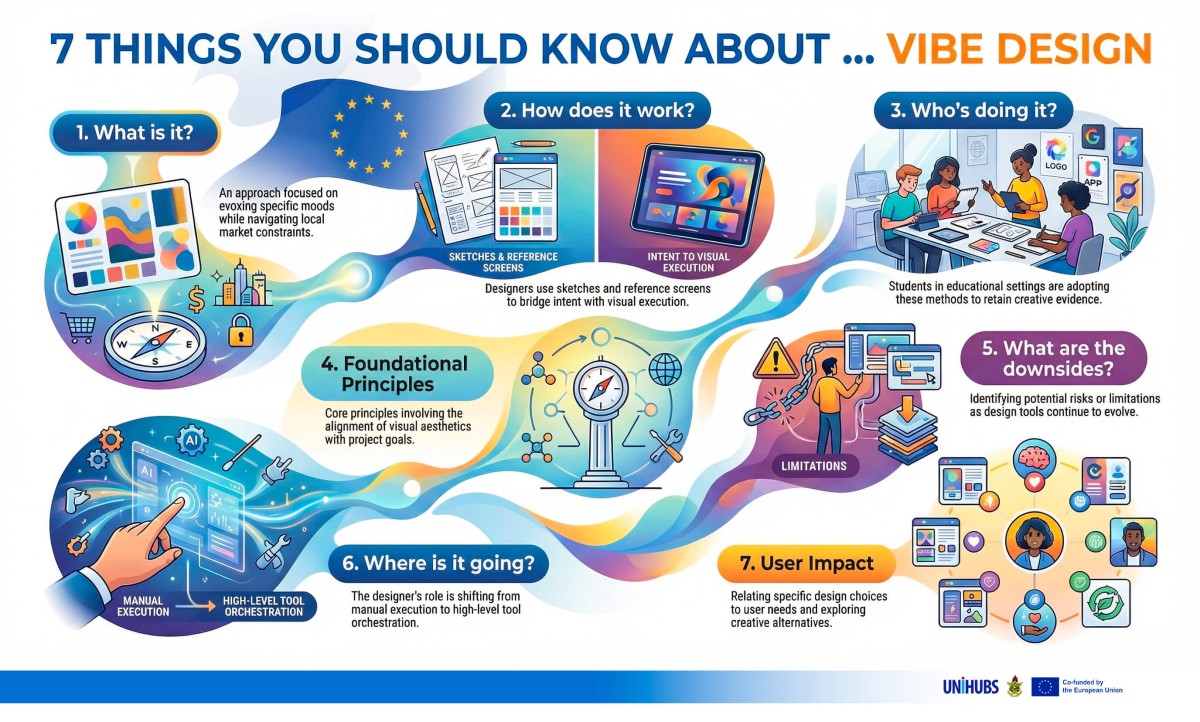
The third publication, Vibe Design, explores how AI is transforming creative and user-centred design processes. Using AI-assisted tools, students can rapidly generate layouts, interface concepts, and design alternatives based on user needs and project goals.
The publication highlights how AI can support faster experimentation and creative exploration while still requiring strong human judgment, ethical reasoning, and contextual understanding. Students are encouraged to think critically about user experience, accessibility, cultural context, and the broader impact of their design decisions.
As these technologies continue to evolve, the role of designers is expected to shift increasingly toward strategic thinking, evaluation, and creative orchestration rather than purely manual execution.
Why These Topics Matter
Together, these three publications reflect a growing global conversation about the future of work and education in the age of AI. Universities are increasingly being challenged to prepare students not only with technical knowledge, but also with the ability to adapt, collaborate, innovate, and use emerging technologies responsibly.
For entrepreneurship education in particular, AI-assisted approaches offer new opportunities for students to prototype ideas, explore solutions, and develop innovation-driven projects more efficiently. At the same time, the publications emphasise the need for ethical awareness, critical reflection, and responsible use of AI technologies.
Through these resources, UNIHUBS continues to support a learning environment where students are empowered to become active creators, innovators, and future-ready professionals.
Access the Publications
The publications are available here.